2026-10-29 · By Todd Michael Gori
Keeping the Book Separate From Your Own Reading of It
A small note-taking habit that keeps what a source says apart from what you think it means, so your later reasoning stays honest and checkable.
Why the Two Get Blurred
When you read a dense book, the author's sentences and your own conclusions tend to merge into one smooth paragraph in memory. A week later you may remember a conclusion without remembering whether the book stated it, implied it, or whether you added it while reading. Learning researchers describe retrieval practice as trying to recall material from memory before checking the source, and then checking notes afterward to correct gaps and misunderstandings. That after-check is where a claim can be tested against its source rather than against your recollection of it. The same idea applies to interpretation: you cannot correct what you never separated in the first place.
A Worked Example With a Hypothetical Note
Suppose you read a passage that describes spacing study across several sessions instead of cramming. A hypothetical note that blends claim and interpretation might read: 'Spacing means I can skip review days if I am busy.' The first half is a paraphrase of a learning principle; the second half is your own practical inference, and it may not follow. A cleaner version splits them into two labeled lines: 'Claim (from the source): spaced practice distributes study across sessions, and a plan can revisit older material as well as recent topics. Interpretation (mine, untested): I could skip a day if I make up the review later.' Written this way, you can later check the claim against the text and judge the interpretation on its own merits, which may turn out to be weaker than it first felt.
A Small Reader Exercise
Pick one page from a book you are reading now, or use an article you saved. Write three columns on a blank sheet: what the text states, what it implies, and what you conclude. Keep each entry to a single sentence. Then cover the first column and try to recall the claim from memory, and uncover it to compare. Count how many of your remembered sentences were actually in the source. This is a hypothetical exercise to build awareness, not a measure of anything, and your results will vary depending on the book's density and how much attention you gave it.
A Checklist for Your Notes
Before you trust a note, ask a few plain questions. Does this line name a source, or does it stand alone? Did the author actually say this, or did I infer it? If I inferred it, what would I need to see to test the inference? Could I restate the claim in a way the author would recognize? Have I written my own conclusions in a visibly different style, such as a bracketed label? Revisit notes after a few days and mark any interpretation that no longer holds up. Limitation: this habit will not make a weak argument strong, and no note-taking method replaces reading the whole book carefully.
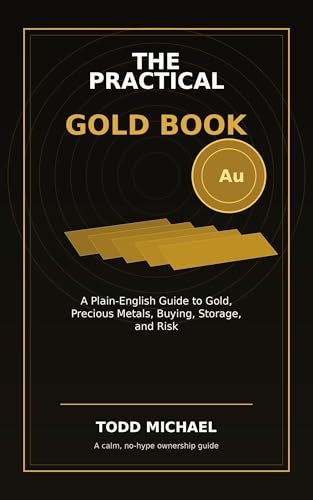
Optional reading: The Practical Gold Book covers gold and precious metals in plain language. This article does not claim anything about that book's chapters, and it is offered only as a related read for anyone exploring that topic.